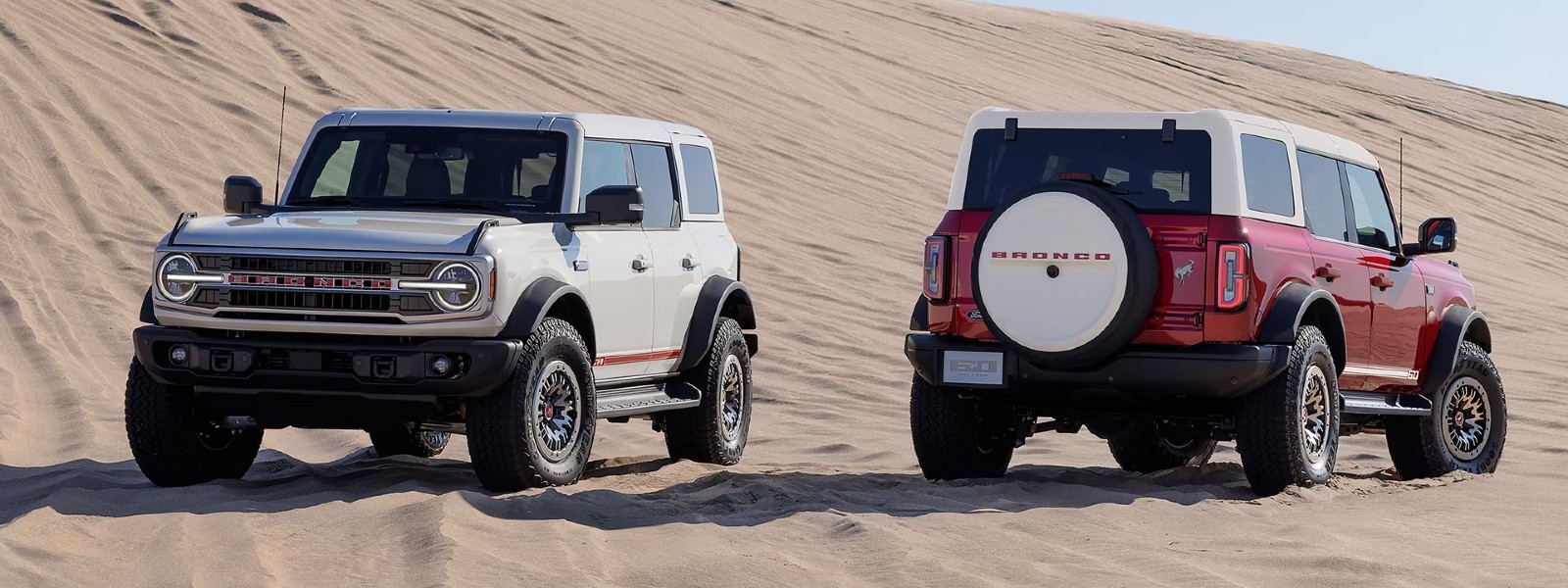
If you’ve been shopping for a capable, adventurous SUV, chances are you’ve run into the Ford Bronco vs. Ford Bronco Sport question — and it’s a fair one to ask. They share a name, a rugged attitude, and a lot of curb appeal, but under the skin, these two vehicles are built for pretty different lives. At Brinson Ford of Athens, TX, customers ask us about this comparison all the time, and the honest answer is: it depends entirely on what you’re actually going to do with the vehicle.

Platform & Foundation
To really understand the difference between the Ford Bronco and Bronco Sport, you have to start at the foundation. The full-size Bronco rides on a body-on-frame platform — the same architecture used in serious off-road trucks — and comes in both two-door and four-door configurations. It has a proper part-time four-wheel-drive system with a dedicated low-range transfer case, removable doors and roof, and available features such as a front locking differential and 35-inch factory tires on top trims.
The Bronco Sport is built on the same platform as the Ford Escape — a car-based unibody design. That makes the Sport lighter, more fuel-efficient, and more comfortable on the highway. It comes standard with Ford’s intelligent all-wheel drive system with selectable terrain modes, and even the base model handles light trails and gravel roads confidently.
Off-Road Capability
For hardcore off-roading, the answer is clear: the full-size Bronco wins. The body-on-frame construction handles flex and impact better on rocky terrain. The part-time 4WD with true low range gives you the mechanical advantage to creep over boulders at low speed. With available locking front and rear differentials, 35-inch tires, and nearly a foot of ground clearance, it’s genuinely competitive with dedicated off-road vehicles like the Jeep Wrangler Rubicon. Ground clearance tops out at 11.6 inches on the Badlands and Raptor trims, and water fording depth reaches up to 33.5 inches.
The Bronco Sport is a capable light off-roader — especially in Badlands trim with its rear locking differential and all-terrain tires. It handles gravel roads, mud, and light trails well. For the kind of off-roading most buyers actually do around East Texas — fire roads, gravel trails, light mud — the Sport handles it well. But if you’re heading into serious backcountry, the full-size is the right choice.
Towing & Cargo
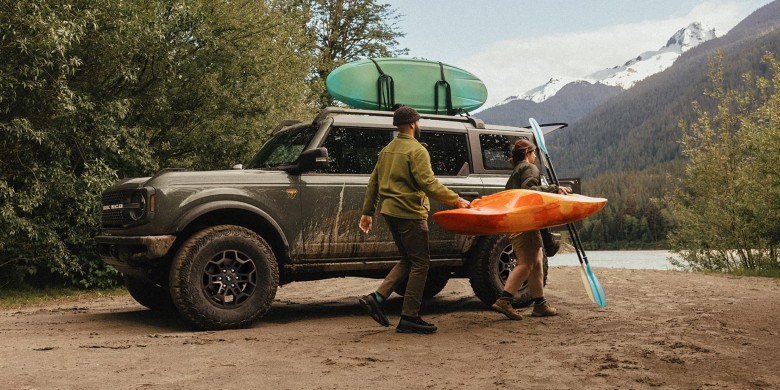
The two vehicles differ noticeably in towing, and the gap matters if you’re hauling anything heavier than a small camper or jet ski. The full-size Bronco can tow up to 4,500 lbs. when properly equipped with the 2.7L EcoBoost V6. The Bronco Sport tops out at 2,200 lbs. A 2,200-lb. limit is enough for a small pop-up camper, a personal watercraft, or a motorcycle. But if you’re towing a mid-size travel trailer or a boat to Lake Palestine or Lake Fork near Athens, you’ll want the full Bronco.
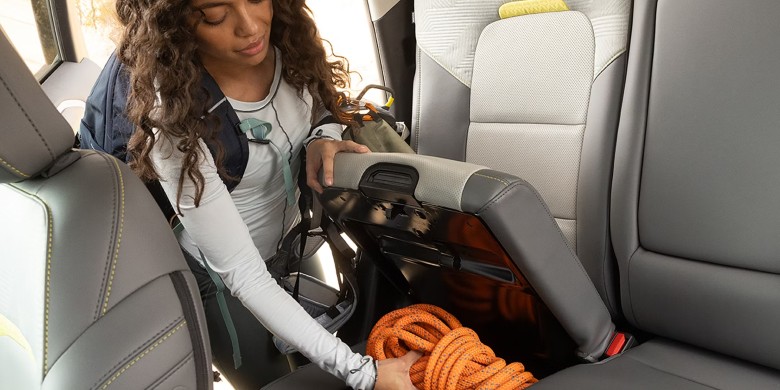
On cargo, the story is closer. The 4-door Bronco offers about 35.6 cubic feet behind the second row — slightly more than the Bronco Sport’s 32.5. Both have a frunk (front trunk) in the hood, which is great for stashing wet or muddy gear separately. Neither is a family hauler, but both offer practical daily usability.
| Feature | Ford Bronco (Full-Size) | Ford Bronco Sport |
|---|---|---|
| Body Style | 2-door or 4-door SUV | 4-door compact SUV |
| Platform | Body-on-frame (truck-based) | Car-based unibody |
| 4WD System | Part-time 4WD with low range | AWD with selectable modes |
| Ground Clearance | Up to 11.6 inches | Up to 8.8 inches |
| Water Fording Depth | Up to 33.5 inches | Up to 23.6 inches |
| Max Towing Capacity | Up to 4,500 lbs. | Up to 2,200 lbs. |
| Cargo Space (behind 2nd row) | 35.6 cu. ft. (4-door) | 32.5 cu. ft. |
| Best For | Serious off-roading, overland | Daily driving, light trails |
Source: ford.com. Specs may vary by trim and configuration. See dealer for details.
Which One Is Right for You?
If off-roading is the primary reason you’re cross-shopping these two, the full-size Bronco is worth the extra money. If you want something capable of occasional trail use with a more car-like daily experience, the Bronco Sport offers better value for most buyers.
Buy the full-size Bronco if: You want maximum off-road capability. You plan to tow more than 2,200 lbs. regularly. You want the removable doors and roof experience. You want a long-term adventure vehicle.
Buy the Bronco Sport if: You want daily comfort with weekend capability. Fuel economy and a lower price point matter. Most of your driving is on highways and city streets with the occasional light trail.
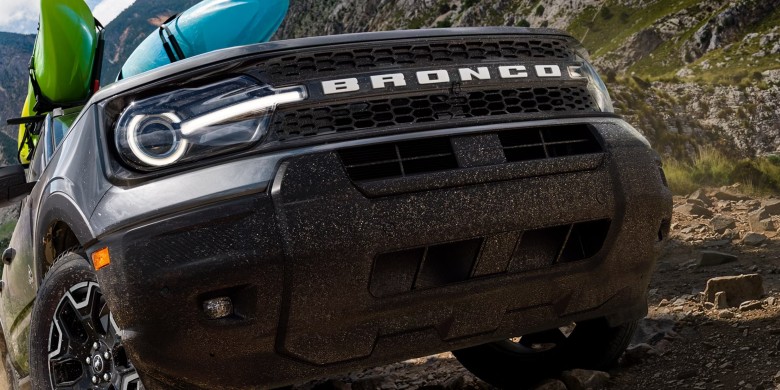
Whether you’re leaning toward the full-size trail machine or the Bronco Sport’s everyday-capable package, the best way to know for sure is to get behind the wheel. Visit Brinson Ford of Athens, TX — serving Athens, Palestine, Jacksonville, and the greater East Texas area.

No. The Bronco Sport uses a car-based unibody platform shared with the Ford Escape. The full-size Bronco uses a body-on-frame platform similar to a truck, which is a key reason for the difference in off-road capability. Source: ford.com.
Yes. The Bronco Sport is a capable light off-roader, especially in Badlands trim with its rear-locking differential and all-terrain tires. It handles gravel roads, mud, and light trails well, but isn’t designed for rock crawling or deep water crossings like the full-size Bronco. Source: ford.com.
The full-size Ford Bronco can tow up to 4,500 lbs. when properly equipped. The Bronco Sport has a max towing capacity of 2,200 lbs. The full Bronco is the better choice if you regularly tow a boat, trailer, or larger recreational equipment. Source: ford.com.
No. Removable doors and roof are features exclusive to the full-size Ford Bronco. The Bronco Sport has a fixed roof and doors, which contribute to its quieter, more car-like interior. Source: ford.com.
The full-size Ford Bronco offers up to 11.6 inches of ground clearance on top trims. The Bronco Sport provides up to 8.8 inches. That difference is significant when navigating rocky trails or deep ruts. Source: ford.com.
Yes. Brinson Ford of Athens stocks both the full-size Ford Bronco and the Bronco Sport. Inventory changes frequently — check online or contact the dealership for current availability.
Source: ford.com. All specs and towing figures require proper equipment and configuration. Before towing, carefully review the Towing section of the Owner’s Manual. The towing capacity of your specific vehicle may vary.
Si has estado buscando una SUV capaz y aventurera, es probable que te hayas encontrado con la pregunta del Ford Bronco vs. Ford Bronco Sport. Comparten nombre, actitud y apariencia, pero bajo la carrocería, estos dos vehículos están construidos para vidas muy diferentes. En Brinson Ford of Athens, TX, nuestros clientes nos hacen esta comparación todo el tiempo, y la respuesta honesta es: depende de lo que vayas a hacer con el vehículo.
Plataforma y Base
Para entender la diferencia entre el Ford Bronco y el Bronco Sport, hay que empezar por la base. El Bronco de tamaño completo utiliza una plataforma de chasis separado — la misma arquitectura de las camionetas off-road serias — y viene en configuraciones de dos y cuatro puertas. Tiene un sistema de tracción en las cuatro ruedas a tiempo parcial con caja de transferencia de reducción, puertas y techo desmontables, y diferencial delantero de bloqueo disponible.
El Bronco Sport está construido sobre la misma plataforma que el Ford Escape — un diseño de carrocería unitaria basado en un auto. Eso lo hace más ligero, más eficiente en combustible y más cómodo en la autopista. Viene de serie con el sistema de tracción total inteligente de Ford con modos de terreno seleccionables.
Capacidad Todoterreno
Para el todoterreno extremo, la respuesta es clara: el Bronco de tamaño completo gana. La construcción de chasis separado maneja mejor la flexíbilidad e impacto en terreno rocoso. El 4WD a tiempo parcial con reducción real te da ventaja mecánica para avanzar lentamente sobre rocas. Con diferenciales de bloqueo delantero y trasero disponibles, llantas de 35 pulgadas y casi 30 cm de altura al suelo, es competitivo con vehículos off-road dedicados. La altura al suelo llega a 11.6 pulgadas en los niveles Badlands y Raptor, y la profundidad de vadeo alcanza hasta 33.5 pulgadas.
El Bronco Sport es un todoterreno ligero capaz — especialmente en nivel Badlands con su diferencial trasero de bloqueo y llantas todo terreno. Maneja bien caminos de grava, lodo y senderos ligeros alrededor del Este de Texas.
Remolque y Carga
Los dos vehículos difieren notablemente en remolque. El Bronco de tamaño completo puede remolcar hasta 4,500 lbs. con el motor V6 EcoBoost de 2.7L. El Bronco Sport tiene un máximo de 2,200 lbs. Un límite de 2,200 lbs. es suficiente para una pequeña casa rodante desplegable, una embarcación personal o una motocicleta. Pero si vas a remolcar una casa rodante mediana o un bote al Lago Palestine o Lago Fork cerca de Athens, necesitarás el Bronco completo.
En cuanto a carga, la diferencia es menor. El Bronco de 4 puertas ofrece aproximadamente 35.6 pies cúbicos detrás de la segunda fila vs. 32.5 del Bronco Sport. Ambos tienen un compartimento frontal (frunk) ideal para guardar equipo mojado o con barro por separado.
| Característica | Ford Bronco (Tamaño Completo) | Ford Bronco Sport |
|---|---|---|
| Tipo de Carrocería | SUV de 2 o 4 puertas | SUV compacta de 4 puertas |
| Plataforma | Chasis separado (base de camioneta) | Carrocería unitaria |
| Sistema 4WD | 4WD a tiempo parcial con reducción | AWD con modos seleccionables |
| Altura al Suelo | Hasta 11.6 pulgadas | Hasta 8.8 pulgadas |
| Profundidad de Vadeo | Hasta 33.5 pulgadas | Hasta 23.6 pulgadas |
| Capacidad Máx. de Remolque | Hasta 4,500 lbs. | Hasta 2,200 lbs. |
| Espacio de Carga (detrás del 2° asiento) | 35.6 pies cúbicos (4 puertas) | 32.5 pies cúbicos |
| Mejor Para | Off-road serio, aventura | Uso diario, senderos ligeros |
Fuente: ford.com. Las especificaciones pueden variar según el nivel y configuración. Consulte al distribuidor para detalles.
¿Cuál Es el Correcto para Ti?
Si el todoterreno es la razón principal por la que estás comparando estos dos, el Bronco de tamaño completo vale la inversión extra. Si quieres algo capaz para uso ocasional en senderos con una experiencia de manejo más parecida a un auto, el Bronco Sport ofrece mejor valor para la mayoría de los compradores.
Compra el Bronco completo si: Quieres máxima capacidad off-road. Planeas remolcar más de 2,200 lbs. regularmente. Quieres la experiencia de puertas y techo desmontables.
Compra el Bronco Sport si: Quieres comodidad diaria con capacidad para fines de semana. La economía de combustible y un precio menor son importantes para tu presupuesto.
Ya sea que te inclines por la máquina todoterreno de tamaño completo o el paquete cotidiano del Bronco Sport, la mejor manera de saberlo es sentarte al volante. Visita Brinson Ford of Athens, TX — sirviendo a Athens, Palestine, Jacksonville y el mayor este de Texas.
No. El Bronco Sport usa una plataforma de carrocería unitaria compartida con el Ford Escape. El Bronco completo usa una plataforma de chasis separado similar a una camioneta, lo que explica la diferencia en capacidad off-road. Fuente: ford.com.
Sí. El Bronco Sport es un todoterreno ligero capaz, especialmente en nivel Badlands con su diferencial trasero de bloqueo y llantas todo terreno. Maneja bien caminos de grava y senderos ligeros, pero no está diseñado para vadeo profundo como el Bronco completo. Fuente: ford.com.
El Ford Bronco completo puede remolcar hasta 4,500 lbs. con el equipo adecuado. El Bronco Sport tiene una capacidad máxima de 2,200 lbs. Fuente: ford.com.
No. Las puertas y el techo desmontables son exclusivos del Ford Bronco de tamaño completo. El Bronco Sport tiene techo y puertas fijos. Fuente: ford.com.
Sí. Brinson Ford of Athens tiene en inventario tanto el Ford Bronco de tamaño completo como el Bronco Sport. El inventario cambia frecuentemente — revise en línea o contáctenos para disponibilidad actual.
Fuente: ford.com. Todas las especificaciones y capacidades de remolque requieren equipo y configuración adecuados. Antes de remolcar, revise la sección de Remolque del Manual del Propietario. La capacidad de remolque de su vehículo específico puede variar.